Basement waterproofing in St. Clair Shores, and what the ground here does
The soil sampled around St. Clair Shores is classed as very poorly drained, which is the single best predictor of whether water sits against a foundation wall after rain.
Interior drain tile: $55-110 per linear foot
Exterior excavation: $95-250 per linear foot
Sump system: $1,200-2,600
Soil drainage near St. Clair Shores: Very poorly drained
Free written quotes, one local company
The soil sampled around St. Clair Shores is classed as very poorly drained, which is the single best predictor of whether water sits against a foundation wall after rain.
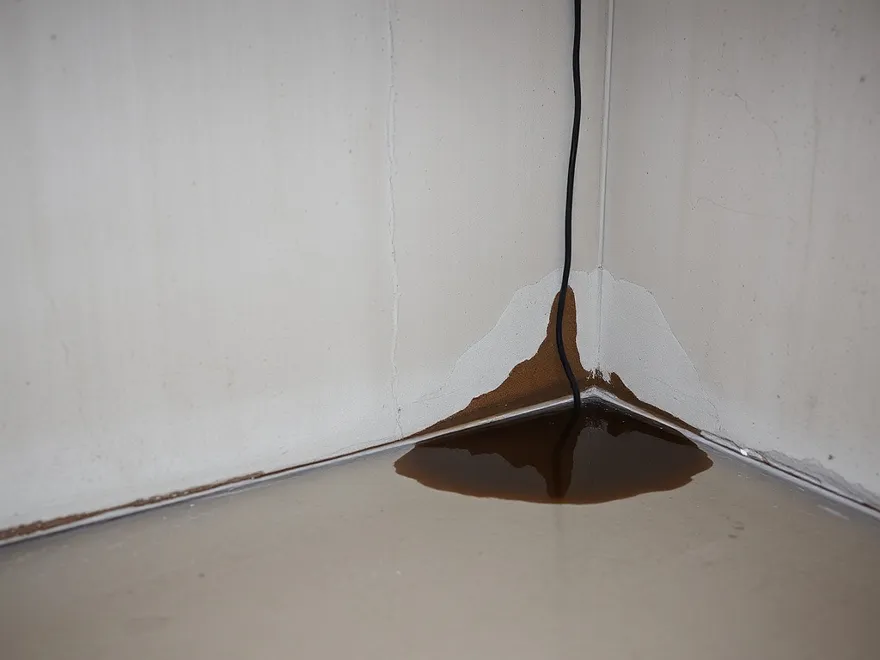
Hydrostatic pressure in St. Clair Shores
黏土 50%——排水慢,雨後牆外的水壓維持得久; 屋齡中位 1957 年——那個年代的地下室牆多半沒有外部防水層,只靠混凝土本身.
Where the water shows up decides the method, and the two methods differ by roughly two times in price. That is why the first thing worth doing is looking at where the stain actually sits, not at which company sounds most confident.
The four methods, and what each one is for
| Method | Installed price | Fixes | Does not fix |
|---|---|---|---|
| Interior drain tile + sump | $55-110 per linear foot | Water rising at the wall-floor joint | Water entering mid-wall |
| Exterior membrane + drain | $95-250 per linear foot | Water entering through the wall | Costs about 2x and needs excavation |
| Sump system alone | $1,200-2,600 | A rising water table under the slab | Any wall entry |
| Crack injection | $350-800 per crack | One identifiable crack, poured walls only | Block walls, general seepage |
St. Clair Shores records about 6 days a year below minus 12 Celsius, and frozen soil expands sideways against a basement wall rather than downward.
At roughly 50 percent clay, the ground around St. Clair Shores drains slowly, so the water pressure against the wall lasts well past the end of the storm.
National ranges, 2026
| Work | Typical installed cost | What decides it |
|---|---|---|
| Interior perimeter, average home | $9,000-18,000 | Linear feet of wall |
| Exterior, average home | $16,000-40,000 | Excavation depth |
| Sump pump system | $1,200-2,600 | Whether a battery backup is included |
| Crack injection | $350-800 | Per crack, poured walls only |
| Grading and downspout work | $300-1,500 | Often the whole fix |
These are national ranges. We have not collected enough quotes in St. Clair Shores to publish a defensible local range, and we would rather say so than invent one.
Permits pulled through: Macomb County
Median home in St. Clair Shores built: 1957
Detached single-family houses: 82%
Water hardness: 271 mg/L (very hard)
Dominant soil series: Toledo
Clay content: 50%
Shrink-swell (LEP): 5.7 - moderate
Freeze-thaw cycles: 74 days a year
Hard freezes: 6 days a year
Annual rainfall: 36 inches
The soil survey calls this ground poorly drained
Ground here is classified as Very poorly drained. That is the single most useful line in a soil survey for a basement, because it tells you the water will still be there tomorrow. Exterior grading and gutter work help, but on poorly drained ground they rarely finish the job alone. **Ask a bidder to say plainly whether they expect exterior work to be sufficient here** - and to put that expectation in the warranty.
Clay soil turns rain into pressure against the wall
Ground around St. Clair Shores runs about 50% clay. Clay drains slowly, so water that reaches the backfill zone sits there and presses against the wall instead of passing through. That pressure is measured in feet of head, and it is the reason interior drain systems exist at all: **you cannot out-seal hydrostatic pressure, you can only relieve it.** If a quote is entirely about coatings and sealants with no drainage component, ask where the water is supposed to go.
Houses here average 1957 - the wall type changes the fix
The median St. Clair Shores home dates to about 1957. Basement walls of that era are frequently hollow concrete block rather than poured concrete, and a block wall behaves completely differently: water travels inside the cores and can emerge several courses away from where it entered. **Ask whether the bidder intends to drill weep holes into the block cores.** A drain system installed against an undrained block wall leaves the water inside the wall, and the wall stays wet.
36 inches a year - the number your pump has to keep up with
St. Clair Shores gets about 36 inches of rain a year, and a single heavy storm can put more water against your wall in an hour than a whole dry week. That is why pump capacity matters more than pump brand. **Ask any bidder for the gallons-per-hour figure at your actual lift height**, not the number on the box - a pump rated 3,000 gph at zero lift may move half that pushing water ten feet up and out. Then ask what happens when the power goes out during the storm that caused the flooding.
Who pulls the permit - and whose name is on it
Work in St. Clair Shores is permitted through Macomb County. Two questions decide whether a quote is honest: **does the price include pulling the permit, and will the company pull it in its own name?** A contractor who asks you to pull it as the homeowner is moving liability onto you - if the inspection fails, it is your permit that failed. Ask for the licence number the permit will be filed under, then check it against the state licence board before you sign anything.
Questions homeowners in St. Clair Shores ask
Interior or exterior - which do I actually need?
Neither is better in the abstract; they solve different entry points. A stain low down where the wall meets the floor is water being pushed up through the cove, and that is what interior drain tile is designed for. A damp patch higher up the wall is water coming through the wall itself, and interior work will not stop it. Match the method to where the water enters and the question answers itself.
Could this just be a gutter problem?
Often, yes, and it is the cheapest thing on the list to rule out. A downspout discharging within three feet of the wall can put over a thousand gallons against that spot in a single storm on an average roof. Extending it costs a few hundred dollars. A company that quotes a system without walking the outside first has told you something about how they sell.
Is a lifetime warranty worth anything?
It is worth as long as the company survives, and this industry has high turnover. Read what it covers: many cover only the specific linear feet installed, so water appearing two feet further along is a new job. Ask whether it transfers on sale, because that is the version with resale value.
The basement is damp but never wet. Do I need a system?
Probably not. Persistent damp with no visible entry point is usually humidity, and a correctly sized dehumidifier plus sealing the rim joist solves it for a few hundred dollars. Waterproofing systems solve liquid water. If nobody can point at where the water comes in, be sceptical of a quote to stop it.
- St. Clair Shores
Get written quotes in St. Clair Shores
Tell us where the water shows up, how high up the wall, and whether it follows heavy rain or arrives on its own. That last detail decides the method. We pass it to one independent local company. No cost, and we do not sell your details on.
Or call (877) 701-2518
Prices in nearby cities
Ann Arbor · Dearborn · Flint · Grand Rapids · Lansing · Roseville · Royal Oak · Saginaw · Southfield · Sterling Heights · Toledo · Parma